I don't know what is missing from the French entry this year.
Alma "Requiem"
The blend of chanson and North African sounds should be appealing but I find it completely forgettable. I think it comes down to Alma. She's a cypher of a singer, and although the tune is catchy, she has no charisma whatsoever.
This isn't going to trouble for the win. It may even fall in the bottom five songs.
Although Eurovision has been over for a couple of weeks, I'm typing about it now because I've finally had my yearly Eurovision party.
Congrats to Sweden. We ranked your fourth.
Usually I have it a little while after the live broadcast, it's an excuse to have people over, make some interesting food, and have a little bit of fun by ranking the songs.
It's always very interesting on where we agree and disagree with the voters from Europe.
Our Favorite:
Aminata "Love Injected" Latvia
Latvia's first final qualifier in eight years won us over with the exceptional vocals from Aminata and the extremely modern, almost avant garde, staging.
It was ranked in the top five of everybody at the party and would recieve our "douze points".
Other Winners:
Lisa Angell "N'oubliez pas" France
Even though Angell was placed in the "slot of death", performing second on the night of the final, Angell's passionate hit us in the sweet spot, coming in second our voting and would have received ten pomts from us. Angell receiving only four points was one of the biggest shocks of this year's voting.
Ann Sophie "Black Smoke" Germany
Ann Sophie wouldn't have gone away with "nul points" if our little group of voters were considered. "Black Smoke" came in sixth in our voting and picked up five points from us. The sexy staging and the powerhouse vocals worked for this little group of Americans.
The Biggest Loser:
Elhaida Dani "I'm Alive" Albania
I'm always happy when Albania makes it to the finals, but I have to agree with almost everybody else at our party and put Dani dead last. There's no hiding off key, screechy vocals.
Other Losers:
Polina Gagarina "A Million Voices" Russia
Although Russia came in seventh in our voting, the little group I had over was made up of members of the LBGT community and their allies. Politics caused us to vote the song down our list, even though we all admitted she hit this song out of the park.
However, the booking of Gagarina by the crowd was extremely tasteless. She's just a singer, not a politician.
Nadav Gued "Golden Boy" Israel
Israel may have hit the top ten in European voting, but the ethnopop from a guy attempting to be Justin Timberlake attempting to be Michael Jackson got more jeers than kudos.
The fake selfie at the end of the song was a particular groan worthy moment...
And that's Eurovision 2015. Now it's time to focus on a move and look forward to 2016 and the contest in Sweden.
As the rehearsals are going on in Vienna, I now get to the fun part of my blog--choosing my favorite songs.
Read on and enjoy
10th place:
Lisa Angell "N'oubliez pas" France
France is always a great country when it comes to Eurovision, and I'm a sucker for chanson. Naturally Angell's song was going to be high on my list.
9th Place:
Electro Velvet "Still In Love with You" United Kingdom
I love the out of left field choice of the UK. It's weird and most of all fun. Fun is something missing in this year's contest and I hope Electro Velvet are going to bring a little bit of joy.
8th Place:
Guy Sebastian "Tonight Again" Australia
Australia is sending a commercially successful song that is a catchy as hell.
7th Place:
Nina Sublatti "Warrior" Georgia
There are a lot of moody young women singing dark dramatic songs at Eurovision this year. This is the only one that hasn't been overworked to death.
6th Place:
Elina Born & Stig Rästa "Goodbye to Yesterday" Estonia
I cannot deny that this is one of the best songs in the contest. I can understand why it's one of the favorites.
5th Place:
Aminata "Love Injected" Latvia
Latvia has finally come to win, not place last in the semifinal. It's delightful to see.
4th Place:
Daniel Kajmakoski "Autumn Leaves" Macedonia
I must confess that Kajmakoski's work on reaching out to the Eurovision fan base has worked on me. If you haven't checked out his cover of Yugoslavia's 1983 entry, Džuli, you really should. It's made me go back and take a listen to his entry that I wrote off back at the beginning of my tour through the 2015 songs. It's popped up to the top of my replay list.
3rd Place:
Monika Kuszyńska "In The Name of Love" Poland
I'm surprised by the fact I keep playing the Polish entry over and over again. Simple songs sung well always hook me. I don't know if it will qualify, but for me it works.
2nd Place:
Ann Sophie "Black Smoke" Germany
If Eurovision songs won on sheer memorability, "Black Smoke" would be my winner hands down. This song has been stuck in my head since I first heard the darn thing, and it's a great one to have on the car stereo with the volume cranked up. It also doesn't hurt that it's in my vocal range. Hello new karaoke song.
1st Place:
Maraaya "Here For You" Slovenia
Hands down my favorite song in the contest, and they're going to be the group I'll definaletly follow in the future, joining a small list like Anouk and Patricia Kaas. Have you heard their other versions--the remix with the students of their music school? Or the remix with the a capella choir? This song has legs and Maraaya has the musical chops.
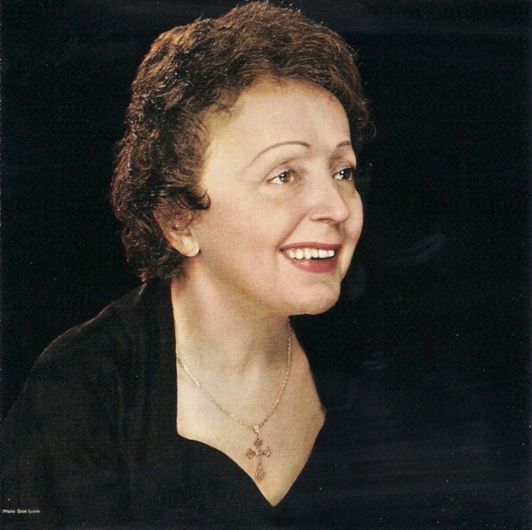
All French chanson singers aspire to the heights of Piaf.
France has decided to go old school this year at Eurovision by sending a classically trained chanson singer to Vienna.
Lisa Angell "N'oubliez pas"
The song was first performed at a concert commemorating the centenary of the First World War and specifically was meant to invoke the memory of that time period.
In other words it doesn't sound like a traditional Eurovision song and because of that I wasn't expecting much from "N'oubliez pas".
Yeah, you know what's coming next. I love the song. It does evoke the "classy" early years of the contest, and Angell is quite a performer.
My only quibble with the song is that she doesn't have the connection with the camera. Angell performed the song to the audience. While that means she got a wonderful reaction, the song falls a bit flat on the screen.
However, with a little work and a good placing on the final, I could see Angell getting a respectable result on the scoreboard. It's not a winning song, but it is one that has the potential to get votes. It's something you can't say with many of the French entries in past years.
After taking care of the discussion of the winning song, I can move on to things that are much more interesting.
This section I'm going to call the "sacrificial lambs". These are songs that deserved to do much better than they did, but due to placement in the running order they got lost in the shuffle.
The best example of this is the starting song in the contest.
Amandine Bourgeois "L'enfer et moi" France
SVT put Ms. Bourgeois in the starting position of the contest with her very French song. Her pitch perfect performance was the best way for the contest to start out, and she killed it. And gave a rather nice Tina Turner impersonation in her leather fringe dress.
Problem is was she was forgotten. Bourgeois landed in 23rd place, gaining almost all of her paltry 14 points from the microstate of San Marino.
The same thing could be said for the song that SVT placed three songs after Ms. Bourgeois.
After watching the semifinal, I had pegged the Finnish entry as a possible dark horse to win the contest.
Krista Sigfrieds "Marry Me" Finland
But being placed as the first upbeat number in the contest meant that it was forgotten by the end, getting a few votes from around Europe and wound up 24th.
(I know many people would think it's because of the "lesbian" kiss at the end, but had this been placed in the last six songs of the contest, that "controversy" would have have been a moot point.)
The last of my "sacrificial lambs" is one that I could see being argued with more, the song from Iceland.
Eyþór Ingi Gunnlaugsson "Ég á líf" Iceland
Mr. Gunnlaugsson ballad was placed after the winner and in my mind he performed the song better than the winning song. But unfortunately, being after the "fan favorite" meant that he was was going to get the unfair comparisons or completely ignored by the people still swooning over Denmark.
Iceland wound up in 17th place with points coming from all over "Western" Europe. with a song that is, in my opinion, much more appealing.
Ah, the sacrificial lambs. I hope to goodness that the EBU goes back to the previous, random, drawing of song places. What makes for a good show is really subjective and I prefer the idea of randomness giving the songs a chance to be placed in prime spots in the show, not the machinations of a few producers.
After letting my jury take a few weeks off after the 2012 contest it was time for us to go back fifty years to the knockoff Dior dresses and Sinatra-like crooning of the 1962 Eurovision Song Contest.
Since Luxembourg's entrant won the previous years contest, Compagnie Luxembourgeoise de Radiodiffusion hosted the contest from their studio, Villa Louvigny, on March 1962.
No new countries entered, so the same sixteen countries in 1961 participated this year. Some countries even sent the same singer.
Fud Leclerc "Ton Nom" Belgium
Leclerc made his fourth and final appearance representing Belgium in the 1962 contest, coming in last place, garnering nul points from the European juries. We were kinder to him. He came in ninth.
We were much less kind to this song:
Camillo Felgen "Petit bonhomme" Luxembourg
The European juries though this was the third best song in the contest. The Alaskan jury put him last, the second time Felgen has come in last in our voting.
But for the winner of the contest, we agreed with the voters on the night. The French entry was the winner.
Isabelle Aubret "Un premier amour" France
Aubret's song was a runaway winner in the European juries, but it came in first in what is our closest vote ever. Aubret just pipped this song for first place:
Lola Novaković "Ne pali svetla u sumrak" Yugoslavia
At the end of the voting of our voting, the two songs were tied, with an equal number preferring each of the two songs, so I had to invite another person to vote--and Aubret won by just one point.
So, Alaskans agreed with Europe again, and next is 1963, one of the more interesting contests in Eurovision history, so look for our post in the next few weeks.
The Eurovision Song Contest went back to the Palais des Festivals et des Congrès in Cannes, France for the 1961 Contest, and pretty much it was a redux of the 1959 contest with the same host on the same stage. Three countries--Finland, Spain, and Yugoslavia--made their debut and the juries from the 16 participating countries decided that the best song was this song.
Jean-Claude Pascal "Nous les amoureux" Luxembourg
"Nous les amoreux" is a prime example of the chanson style that dominated in the early years of the contest and to my ears was nothing special, so I sent this year's contest out to the Alaskan jurors, and they agreed with me. Pascal came in ninth in the voting.
So, I sent the songs out to the Alaska Eurovision jury, and or choice was the song that came in a distant second in the voting in 1961.
The Allisons "Are You Sure?" the United Kingdom
I can understand why this song topped the vote, because it's recognizably pop and the style of song, doo-wop, was distinctly different than every other song in the contest.
But there are two suprising things that have come out of our voting on 1961. The first is that this is the first time an English language song topped our voting. As a bunch of English speakers, I would have figured the the United Kingdom's song would have one sometime before the sixth contest,
The second is that our rankings were wildly different that the voting of the European juries on the night of the contest. It's best explained by this song:
Lili-Babs "April, April" Sweden
On the night of the contest, Lili-Babs got only two points, coming in fourteenth place, while our jury had it coming in second. I suppose we prefer peppy upbeat numbers.
Sadly, it was a different case for the song we ranked last
Ljiljana Petrović "Neke davne zvezde" Yugoslavia
On the night, she came in joint tenth, but her tendency to be off key sadly put her at the bottom of our ranking.
And that's 1961 in a nutshell. Stay tuned for 1962...
Estonia has been one of my favorite countries at the Eurovision Song Contest, in the past few years, they've sent songs that have gone onto my favorites playlist on my iPod, so I was kind of looking forward to the Estonian entry.
Ott Lepland "Kuula"
Although he gets major brownie points for singing in Estonian, his performance leaves me flat. It's just a guy standing at a microphone, holding the stand like he's on a merry-go-round. No matter how gorgeous the voice or how handsome the man singing the song, just standing there just isn't good enough.
Well, unless you're this person
Patricia Kaas "Et s'il fallait le faire" France 2009
All bow down to the greatness that is Patricia Kaas.
Sorry. Got distracted for a minute...
However, I know a way that this dull staging can be changed, and Estonia can put some more people on the stage. Just adapt this video and it's sure to be in the final.
"Kuula", interpreted by HOFF - the Haapsalu Horror And Fantasy Film Festival
A Eurovision song and zombies. Yep. I'm in. And so would all my friends, the least of which is the lovely Janet S., who is a zombie fanatic.
Zombies and Eurovision, two things that go surprisingly great together...
Strangely, the 1960 contest didn't take place in the Netherlands. It's an unwritten rule the the previous year's winner has the privilege of hosting the following year's contest. But because the Dutch national broadcaster had hosted two years previously, they declined the honor. Since the United Kingdom came in second, The BBC picked up the slack and the contest went to London and the Royal Festival Hall.
Thirteen countries, entered the contest, with Luxembourg returning from a one year absence and Norway debuted with an interesting number about a Sami girl pining for her boyfriend.
Nora Brockstedt "Voi Voi" Norway
Sadly, Ms. Brockstedt didn't win the contest, she came in equal fourth place along with the German entry--with 11 points.
The winner was the final song performed in the contest, the French entry, sung by the comely Jacqueline Boyer.
Jacqueline Boyer "Tom Pillibi"
It's a pretty song, but I don't envy her. Tom Pillibi is a con artist and he's got the girl under his spell--he tells her that he's got castles in different places in Europe, but she knows it's a complete lie, but forgets it all when he holds her. Co-dependant anybody? Or is she a gold digger?
So naturally, I sent the songs out to my Eurovision jury so we could determine who we think the winner should be, and neither Ms. Brockstedt or Ms. Boyer did well. We put "Tom Pillibi" in third place, while "Voi Voi" came in eleventh.
Our choice for the best song of the year was the Monegasque entry. Although on the night, the European juries placed it fairly high--it came in third, following the United Kingdom, it was the only song that rated highly with all of the Alaska judges.
François Deguelt "Ce soir-là" Monaco
You could read this one as a companion piece to "Tom Pillibi". In "Ce soir-là", Deguelt is pining for the first night he held his lover in his "arms", and is disconsolate that she left him. My guess is that Tom Pillibi promised her castles. and that was that...
And for those enough nerdy enough to want to know our results, just drop me a line, and I'll be glad to share our rankings.
And that's 1960 in a nutshell. Stay tuned for 1961.
The Third Eurovision Song Contest took place in Hilversum, the Netherlands, on March 12th, 1958. Like the previous contest, ten countries took part in the contest, with Sweden taking the place of the United Kingdom--who withdrew because they were upset by the placing of the entrant in the 1957 contest.
Naturally it makes no sense in retrospect, especially since the song "Volare" was performed by the Italian singer Domenico Modugno, which went on the be a worldwide success and came in third. Third!
And sadly, the prior year's winner, Corry Brokken, came in dead last with her song "Heer de wereld", giving her the unlikely record of being the only person to come in first and last in the contest.
So I sent them off to the jurors for their opinions on the ten songs, and poor André came in seventh.
What was more surprising is that we had a tie for first place--something I hadn't expected. Like most of the readers, I had expected that Italy's Domenico Mondugno would run away with the voting.
Domenico Mondugno "Nel blu dipinto di blu (Volare)"
But after calculating the scores, this famous song tied with the entry from Luxembourg:
Solange Berry "Un grand amour"
So back to the jury I went, because I don't accept ties in the Alaska's Winner. (Since I create the rules, I can modify them along the way, just like the contest has done.)
After getting answers back from the judges, the winner was Italy's Domenico Mondugno. So Domenico and "Nel blu dipinto di blu" is the third Alaska's Winner.
And for those who are interested, here's how the songs placed in our vote:
1. "Nel blu dipinto di blu" Domenico Mondugno Italy
2. "Un grand amour" Solange Berry Luxembourg
3. "Lilla stärna" Alice Babs Sweden
4. "Ma petite chatte" Fud Leclerc Belgium
5. "Giorgio" Lys Assia Switzerland
6. "Heel de wereld" Corry Brokken the Netherlands
7. "Dors, mon amour" André Claveau France
8. "Die ganze Welt braucht Liebe" Liane Augustin Austria
9. "Für zwei Groschen Musik" Margot Heilscher
10. "Jeg rev et blad un af min dagbog" Raquel Rastenni
Next up 1959, with the return of the United Kingdom and the first song from Monaco.
I will say this without much hesitation, I was looking forward to the French entry. In recent Eurovision memory, France sends interesting songs, be it the popera of Amaury Vassili, the electronic art pop of Sebastien Tellier, or the stylings of chanteuse Patricia Kaas.
And when France Télévisions announcement that Anggun was their internal selection to represent France in 2012, I was intrigued, since Anggun is not only from Indonesia, a novelty for Eurovision, but has had international success, especially with her song "Snow on the Sahara", which made the US Billboard Charts.
Anggun "Echoes (You and I)"
But after listening to the song a couple of times, all I can say is I'm left a little bit flat. She's got a powerful voice, the hard rock guitars introducing the song are great, the thumping dance beat and the whistling are good, and there's a unique key change. Yet somehow, putting all these things together has just left me flat.
Really, how the song will place is going to be dependant on the performance on the night of the show. If she is able to put on a complete show in the three minutes of time she has onstage, this will be up towards the top of the board. Otherwise, it's just another forgettable Eurovision song.
In other words, I'l looking forward to this performance on the night of the finals.